
‘AND THEN IT HAPPENED’: HOW UVIC HALL OF FAMER AND FORMER TEAM CANADA CAPTAIN LORI CLARKE FELL IN LOVE WITH THE GAME

By Bandits Contributor: Grant Vassos • January 8, 2021

Lori Clarke had already grown taller than most girls in her class by the time she was in Grade 8. She remembers standing in Abbotsford Junior High School’s gym like it was any other day. A teacher familiar with Clarke's talents for the game came up to her asking if she was going to play for the high school basketball team next year. 


Without hesitation, she answered yes.


Growing up in Abbotsford, B.C., there was always a sports-minded approach to Clarke's community. From junior high to high school, she remembers the thrill of playing in front of a packed gym at Abbotsford Senior Secondary filled with fans who had travelled from nearby neighbourhoods of her tight knit west-coast town in the early 1980s.


It wasn't like playing in larger urban cities such as Vancouver or Toronto. Abbotsford’s sports scene had an undeniable energy that, as an athlete, Clarke had grown to love since she was 10-years-old. 


In Grade 9, Clarke was already a call-up for the senior girl's basketball team at Abbotsford Senior for parts of the season. Fellow members of the team were Clarke's older sister, Teri – who she grew up playing with as teammates at Jackson Elementary under their mom, who was their coach. 


Competing with older players at Abbotsford Senior was a motivating factor for Clarke, who took note of their strength and athleticism. Despite being outweighed by her seniors, she concentrated on her craft. Whether it was at recess, during her lunch break, or during the summer, Clarke spent every minute she could with a ball in her hand. By Grade 11 and 12, Clarke was excelling on the court. 


Her habits in the classroom, however, had to change.


"I started to say, ‘Okay, I’ve got to start passing my high school classes because I need to get into university," Clarke said with a chuckle. “It was a dream – almost. I never really thought that I could do it, but I just kept working and working and then it happened."


Programs started recruiting Clarke. One school, in particular, was Eastern Washington University, led by head coach Bill Smithpeters. Clarke had heard about how the competition in the U.S. was believed to be better and she didn't have much access to watching Canadian university basketball on television when growing up. On top of that, her grades also "weren't that strong for a Canadian university" at the time. 


Her decision was final. Clarke was going to be an Eagle. 


The first couple of months living in Cheney, Wash., were hard for the 17-year-old freshman. She was homesick and like most athletes coming out of high school, the shock of playing a different level of basketball was settling in. However, an opportunity to play extra minutes arose when two girls ahead of Clarke on the depth chart suffered injuries. 


On the court, the forward's competitiveness caught the attention of Smithpeters, who opted to insert Clarke in the starting lineup for the rest of her freshman year. 


Eastern Washington’s lineup featured several players that stood six feet or taller, including Clarke, who credits the added responsibility of playing on the wing, in addition to the post, for helping develop other aspects of her game, such as her shooting and rebounding.


During Clarke's sophomore year, the Eagles were slated to play in a tournament in Washington featuring the three-time Canadian Interuniversity Athletic Union (CIAU) champion University of Victoria (UVic) Vikettes. The Canadian powerhouse finished in first place.


The tournament offered a moment of clarity for Clarke, who recognized that a Canadian university basketball team wasn’t just capable of hanging with its American counterparts – it could beat them.


Clarke finished her second season at Eastern Washington, but a change of heart was already in progress.


After two years with the Eagles, Clarke returned to Canada with hopes of carving a name for herself on the Canadian university basketball scene and a clear ambition to one day make the Canadian national team.


"I saw how great the Vikettes were and they had this great female coach, Kathy Shields. And of course, I had some friends on the team that I had played with on the provincial team, and I'm like, 'Oh my God. I'm going to UVic,’" Clarke said. 


Clarke was given a mandatory redshirt upon her arrival, where she spent the majority of the year on the practice squad learning a new system which, at times, had her working in the post. The Vikettes placed fourth in the Canada West conference to finish the 1983-84 season; a modest result for a team that lost a number of players to graduation the year prior. Despite the humbling transition, Clarke’s best years were about to begin.

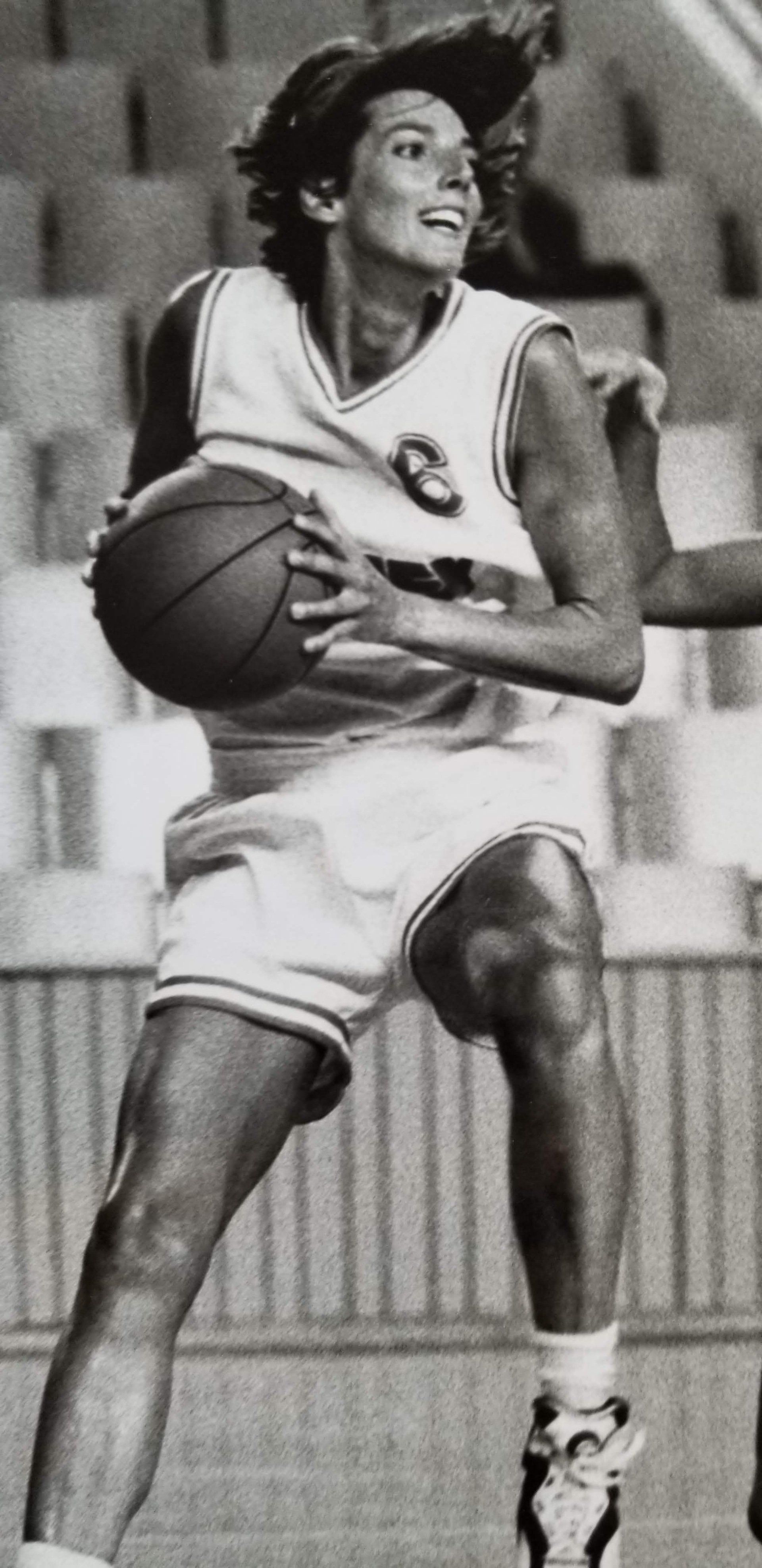
Her resume speaks for itself: two national titles in 1985 and 1987, a three-time Canada West all-star and the second highest points per game average in school history. In Clarke's senior year with the Vikettes, she was named a CIAU first team All-Canadian, and was awarded the Nan Copp Award as Canada’s university player of the year. Today, Clarke remains one of only five players in University of Victoria history to have won the award. 

Clarke was on the fast-track toward stardom and couldn’t help but feel bullish about her future basketball career. However, it wasn't always easy playing under legendary head coach Kathy Shields. Practices were typically more difficult than games, sometimes to a breaking point. 

Shields wanted to make sure her players could handle the pressure when the game got tough.

But above all, Shields was understanding. 

"She's the best coach I ever played for," Clarke said. "She was the right combination of tough and kind. We knew she cared about us as athletes and as humans because if we ever came to her with a human problem, it was more important than our performance on the court."

In 1985, the Canadian senior women's tryouts were taking place in Toronto and Clarke had already been cut six times from previous Junior A and B selection camps. 

The competition was fierce and for twice a day Clarke was going head-to-head against other invitees, hoping to secure a coveted roster spot. As training camp came to a close, head coach Wayne Hussey took Clarke over to a corner and gave her the news. 

At 21-years-old, Clarke had made Team Canada. 


"I was so shocked. I couldn't even understand what he said. I was sure I was going to be cut," Clarke said. "I said, 'Can you say that again?' I just started crying because I was so happy that I made the team because I wanted it so bad."


Clarke became a staple on the national team for seven years, highlighted by a bronze medal at the 1986 FIBA World Championships – which remains tied for the best finish ever by a Canadian national women's basketball team at the tournament. Clarke later served as captain for the red and white at the 1990 World Championships.


When she wasn't representing her country, Clarke made the jump overseas, playing two years in France and another four in Germany. 


Her knees and calves began to feel the wear from nearly two decades of dedicating her mind and body to basketball. In hindsight, she "probably shouldn't have" gone back. But the love for the game was still there, so she returned to Berlin in 1993 for another season. 


It was the last one Clarke ever played.


"I just realized my body was starting to break down," Clarke said. "I could keep fighting it, keep pushing it, but I thought, ‘You know what, for the health of my future life of dancing, walking, riding my bike – it's time.’"


With her playing days finished, a life devoted previously to the hardwood was now spent on the sidelines coaching. First, in Aschaffenburg, Germany – which lasted only a year. In 1997, Clarke agreed to join University of British Columbia (UBC) head coach, and close friend, Deb Huband's coaching staff, where she spent three years balancing duties as an assistant coach while working towards her teaching degree. 


Clarke retired from coaching in 2018 following 14 years as the girl’s basketball coach at Prince of Wales Secondary. After moving away from Vancouver in 2019, she and her wife, Peggy, now live along the province’s Sunshine Coast. When they lived in the city, the sports-loving couple often found themselves at the UBC’s War Memorial Gymnasium on Friday and weekend nights watching Thunderbirds basketball games. 


Nowadays, without the entertainment of live sports, Clarke has been laying low – enjoying the quietness that comes with the indecisiveness of life during a global pandemic. 


In the end, her passion still glows, as it did back in Abbotsford years ago, through the players she’s coached. And hopefully, through the next generation of young girls in her community who pursue basketball for the same reasons she did – for the love of the game.

LATEST NEWS

By Bandits Staff September 10, 2026
The Vancouver Bandits, BC’s professional basketball team, hosted a youth basketball camp on Wednesday, September 9 in Williams Lake, in partnership with the Indigenous Sport, Physical Activity & Recreation Council (I∙SPARC) and FortisBC. The Bandits welcomed over 40 local athletes and their families to the camp, with the main goal of building confidence, inspiring young athletes, and bringing youth sports development and mentorship to athletes across the province. Held at Lake City Secondary, the camp marked the first community visit by BC’s professional basketball team to the Cariboo region, bringing more basketball to more people across our province. “Community is a core pillar of the Bandits organization, and we are proud to host camps and opportunities that help shape and inspire the next generation of players and leaders,” said Vancouver Bandits team president Dylan Kular. “Thank you to our partners at I∙SPARC and FortisBC for their support in bringing this camp to fruition, and to the Williams Lake basketball community for welcoming our team this week.” "We're proud to support opportunities that help young people build confidence, strengthen their skills and create lasting connections," said Janet Devaney, senior manager, community & Indigenous initiatives at FortisBC. "Through initiatives like this basketball camp, Indigenous youth can connect with peers and mentors, develop new skills and experience the positive impact that sport can have on confidence, leadership and a sense of belonging.” The free-of-charge camp was part of the Indigenous Basketball Collective, representing the ongoing collaboration between I∙SPARC and the Vancouver Bandits. Established in 2023, ongoing and past projects through the Collective include camps and clinics for Indigenous youth and coaches, building new basketball courts in Indigenous communities, and hosting the 2026 Junior All Native Basketball Tournament.
By Bandits Staff September 4, 2026
Vancouver Bandits guard Jarkel Joiner has signed an Exhibit 10 contract with the Charlotte Hornets. The news was announced by the Hornets on social media . During his time with the Bandits in the 2026 season, Joiner made 21 appearances, including 13 starts, and finished with 16.9 points, 3.0 rebounds, 4.4 assists and 1.0 steals per games. Introduced in the NBA’s 2017 Collective Bargaining Agreement, Exhibit 10 contracts are one-year deals. They can include a potential bonus if the player spends time with the team’s G League affiliate.
By Bandits Staff September 3, 2026
Former Vancouver Bandits guard Kyle Mangas has signed an Exhibit 10 contract with the Charlotte Hornets. The news was announced by the Hornets on social media. Mangas is expected to practice and compete with the Hornets during the 2026-27 Training Camp and preseason from October 3rd to 12th. During his time with the Bandits in the 2025 season, Mangas finished top five on the team in points (15.3), rebounds (4.6), assists (3.3) and steals (1.3). Introduced in the NBA’s 2017 Collective Bargaining Agreement, Exhibit 10 contracts are one-year deals. They can include a potential bonus if the player spends time with the team’s G League affiliate.
By Bandits Staff September 1, 2026
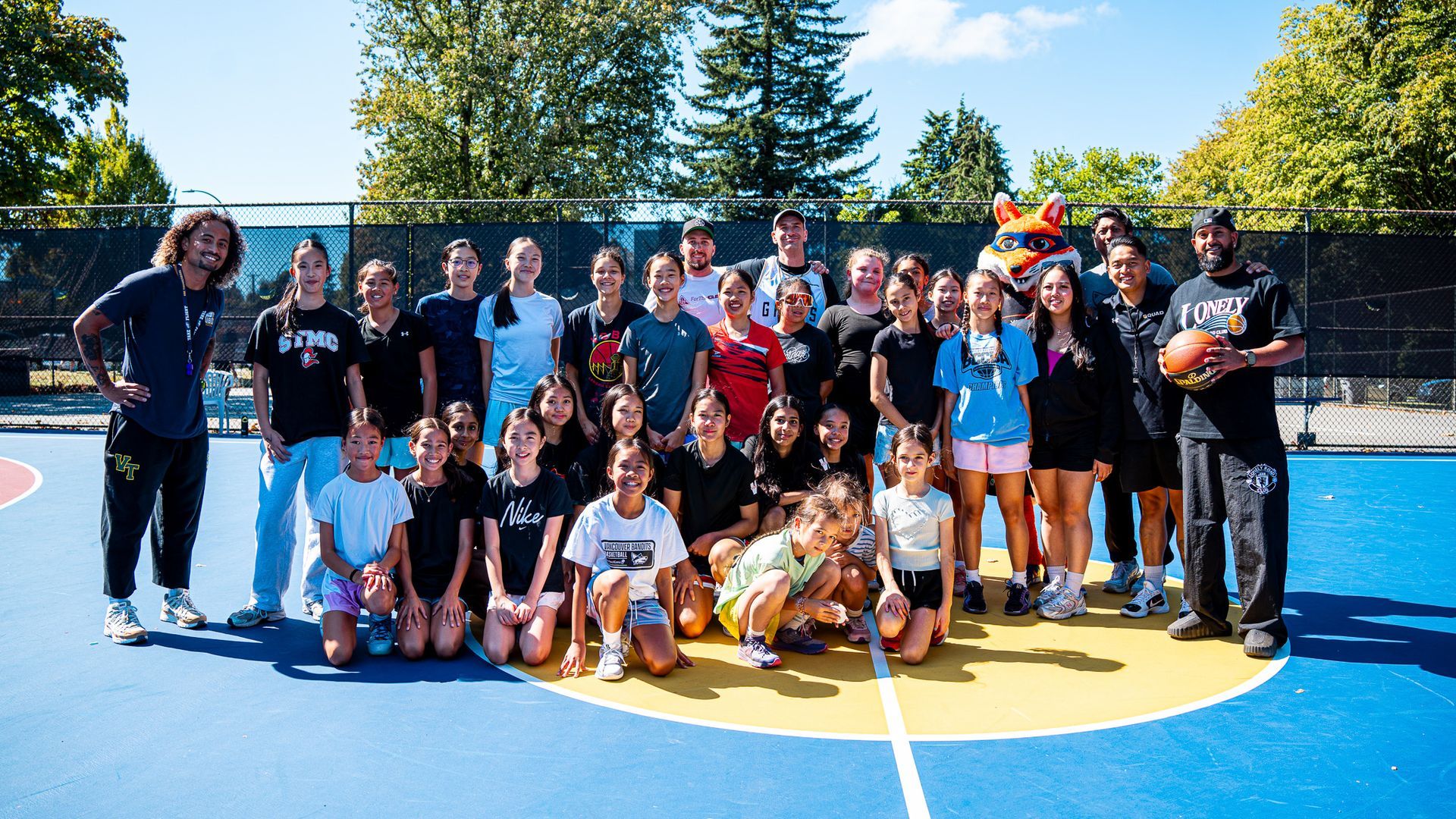
The Vancouver Bandits have partnered with the Vancouver Park Board, Bandits Community Foundation and Little Legends Foundation to unveil a newly renovated outdoor basketball court at Grays Park in South Vancouver. Part of the Bandits Community Foundation’s Court Projects initiative, the team officially unveiled the refurbished court on Saturday (August 30). The grand opening included a ribbon-cutting ceremony followed by a free youth basketball clinic led by local coaches. Attendees also enjoyed a complimentary BBQ lunch, free haircuts and massages, and free backpacks and school supplies distributed for local youth. “The Bandits Community Foundation’s Court Projects initiative was designed to build and enhance public outdoor courts,” said Vancouver Bandits team president Dylan Kular. “The love for the game grows in spaces like Grays Park. This project would not have been possible without the support of our community partners. We will continue to enhance outdoor public courts, make them more inviting, and create stronger communities through basketball.” “Over the past few years, we have been trying to build one of the nicest courts here in South Vancouver for the community,” said community leader Spensir Sangara. “We recognized that Grays Park was one of the few neighbourhood parks without a quality basketball court for the community. Thank you to our businesses and donors who came together to make our vision a reality. This court is filled with a rich basketball culture and this is a legendary day for our community.” “When the Vancouver Bandits approached the Vancouver Park Board with the idea to upgrade this park, it seemed like the right fit and partner to help renew an important asset in a community where basketball plays such an important role,” said Vancouver Park Board Director of Business Services John Brodie. “Thank you to the Bandits and our partners for their generous contributions, and for being examples of what having a strong, community-oriented mission looks like.” The court refurbishment at Grays Park, located at 4850 St. Catherines Street in Vancouver, includes upgrades to the basketball hoops, playing area resurfacing and seating areas. Grays Park was identified as one of Vancouver’s most active outdoor basketball spaces, and community feedback strongly supported the refurbishment. Established in October 2023, the goal of Court Projects is to enhance outdoor basketball courts across British Columbia, creating productive and safe spaces for individuals to play while enriching local basketball at the community level. To date, this partnered team effort has featured the construction and installation of six brand new outdoor basketball courts and upgrading hundreds of basketball rims in communities across BC.​​

LATEST VIDEO

By Bandits Staff May 15, 2026
Highlights of the Vancouver Bandits against the Mamba on May 14, 2026.
By Bandits Staff August 18, 2025
A message from Vancouver Bandits head coach and general manager Kyle Julius on the 2025 season and thoughts on the CEBL Western Conference Semifinal.
By Bandits Staff August 16, 2025
Highlights of the Vancouver Bandits against the Calgary Surge on August 16th, 2025.
By Bandits Staff August 4, 2025
Highlights of the Vancouver Bandits against the Winnipeg Sea Bears on August 3rd, 2025.