

Adapt and Overcome: Marni Abbott-Peter’s Wheelchair Basketball Journey

Grant Vassos, Bandits Contributor • October 23, 2021

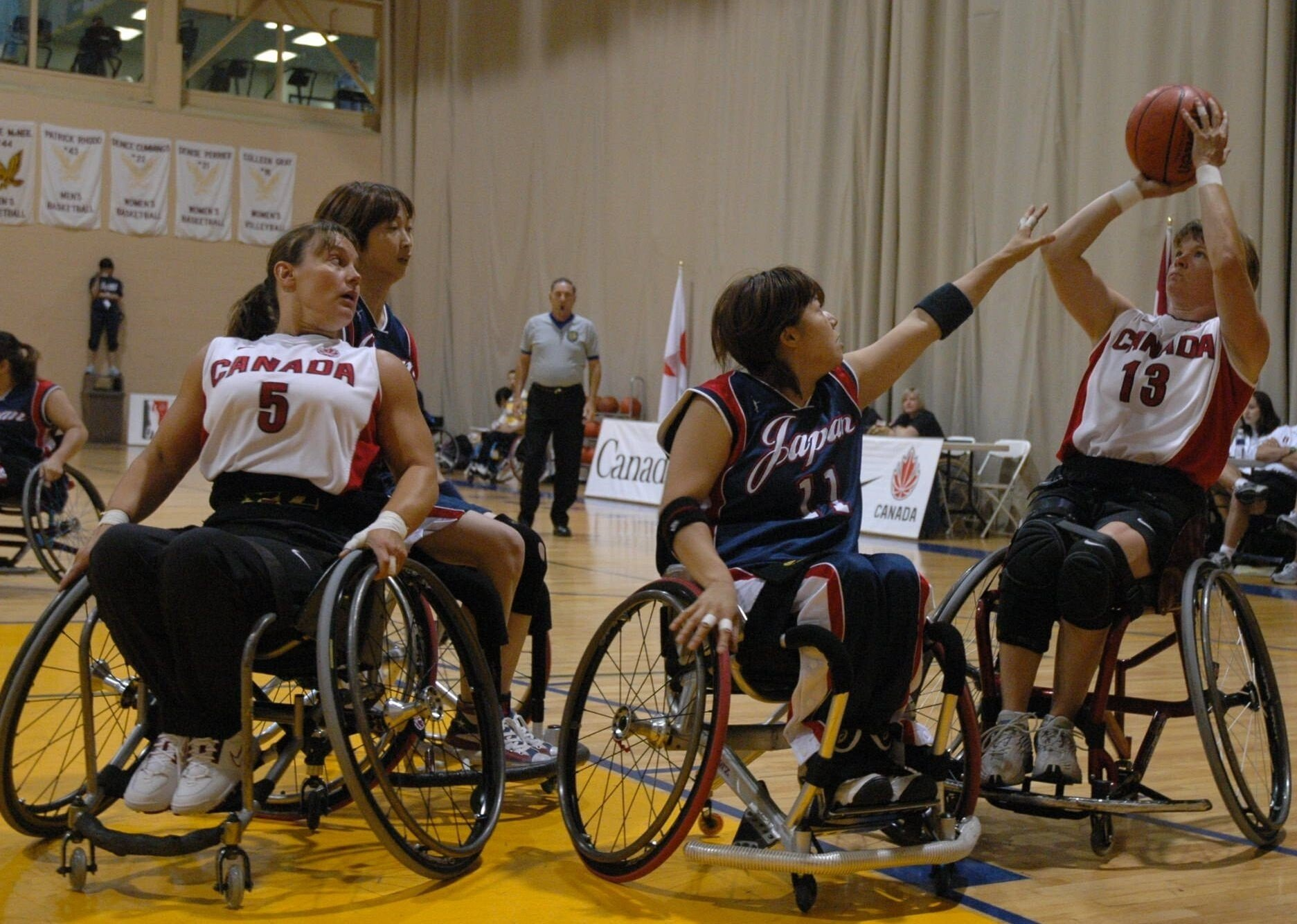
Marni Abbott-Peter and the Canadian women's wheelchair basketball team had just won its first gold medal in program history after beating the United States at the 1992 Paralympics in Barcelona, Spain. 


It was a milestone that marked the beginning of a future dynasty. One that saw Abbott-Peter and the national team go on to win three-straight Paralympic gold medals and World Championships from 1992 to 2002 — the only wheelchair basketball team to ever accomplish the feat. 


The young girl who grew up with dreams of becoming a nurse and skiing competitively at the Olympics was now a Paralympic champion on the basketball court. 


For her, it was also a turning point towards overcoming the shreds of doubt and self-pity left behind from when she was 18-years-old. 


In 1983, Abbott-Peter crashed during a ski run on the hills of SilverStar Mountain Resort in Okanagan Valley, B.C.. The incident left her with significant damage to the third, fourth and fifth thoracic vertebrae between her shoulder blades. 


"Sport really made me understand that walking wasn't as important as it seemed to be at the time that I broke my back," Abbott-Peter said.


Growing up, most of Abbott-Peter’s childhood was spent playing outside and around her home’s field, where her family also kept the dirt bikes and horses. Such was the good life of living on a small farm in Salmo, B.C., a town located south of the city of Nelson, where she was born. 


By the time she was three-years-old, her father was already bringing Abbott-Peter and her older brother, Bill, and younger sister, Misti, to the local ski hills. 


At the age of five, Abbott-Peter had a delightful surprise when she arrived at one of her races at the Nancy Greene Ski League. Greene, her childhood idol, had come to make an appearance that day. 


While the words Greene spoke of during her visit remain a blur to Abbott-Peter now, the memory remains. She remembers the wool ski sweater worn by the former Olympic gold medalist and the feeling from holding one of the medals the legendary Canadian ski racer brought in the palm of her hand. 


When her family moved to Enderby, B.C., everyone Abbott-Peter knew seemed to be involved in hockey or figure skating. Skiing had been her pastime as a kid. So, in the spirit of trying new things – and because all her friends were doing it – she laced up a pair of figure skates and glided onto the ice.


“Like a bull in a china shop,” was how her mom described it, Abbott-Peter said. 
In Grade 8, while attending A.L. Fortune Secondary, she helped start a ski team under the supervision of her school’s typing teacher. Of the five to six members who joined the squad, she was the only girl at first. Abbott-Peter’s run on the squad lasted until she was in Grade 10, to which Abbott-Peter began to get involved in other high school sports like basketball and volleyball.


Then, the injury happened. 


After being rushed to Vernon Jubilee Hospital, she was immediately flown out to Vancouver and admitted to the spinal cord injury unit at the former Shaughnessy Hospital later that afternoon. Although her injury didn’t require any surgery, Abbott-Peter spent the next three weeks resting in the acute unit. 


She remembers the discomfort of laying down on the flat, hard surface of the Stryker bed. How it flipped over every two to three hours to ensure she wasn’t resting on one side for too long. 


She learned how to maneuver in a wheelchair and manage the limitations of her new body to perform daily living tasks that had once felt routine. 


During her stay, she met another patient by the name of Rick Hansen. The Canadian track and field star was recovering from a shoulder injury he sustained while training for an inaugural wheelchair race set to be demoed at the 1984 Summer Olympics in Los Angeles, Calif., later that year. 


Hansen told her about the Paralympics, what sports she could pursue as a parapalegic and how he had plans to wheel around the world for his upcoming Man in Motion World Tour. 


She thought he was nuts. 


“I was like, 'Whatever, dude,’” Abbott-Peter said with a chuckle. “I can’t even wheel to the cafeteria and you’re going to wheel around the world?”


“But then he did it. And for me, that was really inspiring.”


Following a move to the G.F. Strong Rehabilitation Centre, her physiotherapist, Amanda Reid, recommended that she begin working out in the swimming pool as the next step in her recovery. No extra equipment needed. No specialized chairs required. 


On the first day, however, she threw up in the pool from swallowing too much water. 


“It was horrible,” Abbott-Peter said, on the difficult introduction. “But we stuck with it, and it worked out.”


Five months later, Abbott-Peter was competing at her first para-swim meet at the B.C. Games for the Disabled in Surrey. And by 1986, she was boarding a plane to Puerto Rico to represent Team Canada at the Parapan American Games, where she swam to the tally of four gold medals and a silver medal. 


It wasn’t until witnessing her first international wheelchair basketball game at the games and being introduced to several of the players afterward that Abbott-Peter began pondering a switch to the hardwood. 

In 1988, she chose to give up her swimming career in hopes of finding a path onto the court. Among those who had the most notable impact in her transition was Tim Frick, who was coaching at Douglas College at the time. 


For months on end, the future women’s national team bench boss arrived with Abbott-Peter at the Royals’ basketball gym to help her train, shoot, and practice – sometimes for four hours a day. 


Abbott-Peter was 26-years-old when she received an invitation to join the Canadian national team in 1992. The duty to fill the gap left behind from the Class 1.0 players who had retired loomed. Right away, the rookie guard was given big minutes early in her career. 


She loved every second of it. 


For what Abbott-Peter lacked in speed, she made up for with her aggressive two-way playing style and intensity on the court. She worked to create scoring opportunities for her teammates through the pick-and-roll and made life miserable for teams who attempted to match her physicality on defense. 


And while easy buckets were a difficult luxury for opposing scorers to buy, it sometimes came at the untimely expense of her availability. 


“I definitely either fouled out or was close to fouling out of every single game,” Abbott-Peter said.


Abbott-Peter’s career on the national team spanned all the way into the early 2000s. Many of her teammates, such as Chantal Benoit, Jennifer Krempien, Kendra Ohama, Linda Kutrowski and Tracey Ferguson stayed on throughout. Some of whom still remain her best friends. 


It was trust that kept their teams together when emotions clashed during games and what made them a favourite heading into the 2004 Summer Paralympics in Athens, Greece.


She assumed it would end with the same results every other one had: with a gold medal around her neck. 


Until it didn’t. 


The team that didn’t know how to lose were beaten by the Americans in the Semifinals. But it was how it happened. The team endured a dreadful first-half performance, which made the defeat even harder for Abbott-Peter and her teammates to digest. 


“I don’t know how in the heck our coaching staff got us to regroup and win the bronze medal the next day,” Abbott-Peter said, “But we were devastated.”


While the veteran guard considered staying on for a bit longer after initially having plans to retire coming into the tournament, the mileage from travelling and playing high-level competition was reaching an aching toll on Abbott-Peter’s body. She had also made a decision with her husband, Richard Peter, that they were going to try and raise a family together. 


She was ready to start a new chapter as a wheelchair basketball coach.


The couple were living in Germany when Abbott-Peter received a call from Bill Johnson, who was the head coach of Canada’s women’s program. At first, she thought he was calling to ask her to be an assistant coach for the upcoming 2010 World Championships which was three months out. When she called to give her answer, Johnson’s voice replied back. 


“Actually Marn, no. We need you to play,” Abbott-Peter recalled hearing Johnson’s request with surprise.


Johnson followed up by saying they would only need her to play seven or eight minutes a game. Abbott-Peter asked Richard what he thought about the offer. He was worried that she might get hurt – even though she was also playing on a German club team to help out and stay in shape. 


It didn’t take long before Abbott-Peter sustained an injury. This time, by friendly fire. During a warmup drill before their first game, one of her teammates grabbed a rebound and elbowed Abbott-Peter in her left eye socket coming down. The hit gave her a black eye to start off the tournament. 


People commented that her play looked no different than it did from her final season before retiring. But inside, she could feel that something was missing. 


“I just didn’t have that eye of the tiger,” Abbott-Peter said. 


Today, Abbott-Peter and Richard live in Vancouver, where she works full-time with the B.C. Wheelchair Basketball Society managing its Let’s Play program. The initiative focuses on giving children with physical disabilities in the province a chance to develop sport-specific skills through play. 


Looking back, she doesn’t consider herself a superstar. Her impact as a mentor towards a pioneering wheelchair basketball community that had given so much to her as an athlete, however, says otherwise. 


“It’s like Hotel California,” Abbott-Peter said. “You never leave wheelchair basketball.”

All photos courtesy of Bogetti-Smith Photography.

LATEST NEWS

By Bandits Staff December 2, 2025
Vancouver Bandits team president Dylan Kular has been named a recipient of a 2025 B.C. Multiculturalism and Anti-Racism Annual Award, announced by the Government of B.C. on Tuesday. The annual awards celebrate people and organizations that demonstrate leadership in promoting multiculturalism, anti-racism and intercultural understanding. Nearly 50 people and organizations were nominated for 2025 awards, recognizing contributions to building inclusive communities. In addition to Kular, three people and one organization are also receiving the B.C. Multiculturalism and Anti-Racism Awards for their exceptional efforts to fight racism and promote inclusion in British Columbia. “These award recipients exemplify the values of inclusion and respect that strengthen our province,” said Niki Sharma, Attorney General. “Their leadership and creativity are inspiring. I am proud to honour their exceptional efforts to break down barriers, foster inclusion and build stronger, more equitable communities across British Columbia.” Kular was named a recipient of the “Breaking Barriers” award, which recognizes individuals and organizations for their work in tackling systemic or institutional racism and reducing barriers for marginalized communities. “It is an honour to receive this recognition from the Government of B.C . This award truly reflects the collective efforts of our entire organization,” said Kular. “Our team ownership group provides the leadership that empowers our organization to build and foster meaningful change. The Vancouver Bandits and Bandits Community Foundation are committed to continue breaking barriers and connecting communities across B.C. through the sport of basketball.” Under Kular’s leadership in 2025, which saw him earn CEBL Executive of the Year honours for a league-record third time, the Vancouver Bandits led efforts in building inclusive communities through sports and partnerships with Indigenous organizations and diverse populations across the province. Through partnerships and initiatives through the Bandits Community Foundation , such as the Indigenous Basketball Collective , in collaboration with the Indigenous Sport, Physical Activity & Recreation Council (I-SPARC) and the Junior All Native Tournament (JANT). Kular and the Bandits worked to address systemic barriers and foster meaningful engagement, particularly for individuals with intersecting identities and those in remote areas. “Advancing anti-racism and intercultural trust requires courage, collaboration and commitment,” said Amna Shah, parliamentary secretary for anti-racism initiatives. “These honourees demonstrate all three values through their actions every day. Their efforts to break down barriers and amplify marginalized voices are making a real difference in schools, workplaces and communities across B.C. I am deeply grateful for their leadership and inspired by the positive change they continue to drive.” The B.C. Multiculturalism and Anti-Racism Awards are part of the government’s broader efforts to counter hate and racism by celebrating and empowering local, community-based advocates. Since launching in 2008, more than 60 individuals and organizations have been honoured. Other initiatives include: an anti-hate community support fund that supports marginalized and at-risk groups with funding for security equipment, graffiti removal and repairs to damaged property the Resilience BC Anti-Racism Network that connects communities with the information, supports and training they need to respond to and prevent future incidents of racism and hate the B.C. Multiculturalism and Anti-Racism Grants, which provide funding to support projects that tackle racial inequity and foster intercultural understanding throughout the province the Racist Incident Helpline, which partners with local organizations to connect people who have experienced racism with resources to help them heal
By Bandits Staff November 19, 2025
The Vancouver Bandits and Bandits Community Foundation announced the launch of its School Tour program for the 2025-26 school year. The program will see Vancouver Bandits’ Head Coach & General Manager, Kyle Julius, visit secondary schools across British Columbia to host basketball skill and training sessions with student-athletes and their teams. Entering its third year, this free-of-charge initiative is part of the Bandits’ ongoing commitment to fostering youth basketball and building community connections throughout the province. The tour will run from November to February and will make weekly stops in different cities. Starting this week, communities that will be visited within the first two weeks of the program include schools in Abbotsford, Mission, Maple Ridge and Pitt Meadows. The full schedule will be announced soon as additional communities are confirmed. Julius, a passionate advocate for youth sports development and mentorship, will be working directly with student-athletes and volunteer coaches at each school visited to offer insights into the game while emphasizing key life skills such as teamwork, resilience, and discipline. Throughout the tour, Julius will provide each secondary school’s basketball program with dedicated and tailored practices along with motivational talks and training materials. Each visit aims to elevate the game of basketball in BC high schools and offer a unique opportunity for students and coaches to learn from BC’s only professional basketball coach. The School Tour program is proudly supported by Preston Chevrolet and NOVO Dental Centre, community-minded sponsors who believe in the value of sports as a catalyst for positive change. During the previous 2024-25 school year, the Vancouver Bandits School Tour and Julius visited with 77 high school teams across British Columbia from November 2024 to February 2025.
By Bandits Staff November 19, 2025
Bandits president Dylan Kular and Milan Mann, Vancouver Bandits co-owner and president of BM Group join Jay Janower on Global News Morning.
By Bandits Staff November 16, 2025
Vancouver Bandits and Bandits Sports & Entertainment (BSE), owners of the Vancouver Bandits basketball team and shareholders in the Canadian Elite Basketball League (CEBL), is pleased to announce that Milan Mann, President of The BM Group, has joined the ownership team. A prominent figure in BC’s construction and real estate ecosystem, Mann has spent over a decade at the helm of the locally-owned construction firm. The BM Group represents a portfolio of construction services, project management, material supply and land development companies. Headquartered in British Columbia and primarily serving the Lower Mainland, The BM Group also has expanded operations and significant holdings in other parts of Canada, the USA and South East Asia. "It is a privilege and a dream come true to give back to the sport and community that have given me so much. Basketball is a powerful unifier, a vital part of every community’s infrastructure and cultural fabric,” said Mann. “As a community partner and season ticket holder for a few seasons, I have seen the Bandits embody that spirit. The in-game energy and passion from Bandits fans prove that the CEBL is not just entertaining but engaging, competitive, and growing fast, with the Bandits leading that charge. I am grateful to join the existing team and to contribute to the Bandits’ vision on and off the court. With our fans, partners, and community, we have the opportunity to grow the game, strengthen our culture, and inspire the next generation. Go Bandits." “Milan is the definition of a builder, not just in business but in community,” said Dylan Kular, President, Vancouver Bandits. “He believes in the power of sport to unite people and elevate a region. He has been in our building, he has been in our community, and he has seen firsthand what Bandits Basketball means to this province. Milan coming on board is more fuel to our mission: to grow the game, elevate basketball in BC, and create a franchise our province is proud of. We are thrilled to welcome him into the ownership group as we take our next step.” Mann joins Kevin Dhaliwal, Founder and President of Essence Properties , and Bryan Slusarchuk, Principal of SluzCap , in the Bandits ownership group. Since purchasing the Vancouver Bandits in September 2022 , Dhaliwal and Slusarchuk have helped guide the club through meaningful progress both on and off the court. This announcement comes on the heels of the Bandits earning five CEBL Business Awards in the past two seasons, including Franchise of the Year (2025), the Digital Excellence Award (2024), the Community Champion Award (2024 & 2025) and Executive of the Year (2025, Dylan Kular). The Bandits are regarded as one of the premier franchises in the CEBL, also earning back-to-back CEBL basketball awards, including Most Valuable Player (2024, Tazé Moore; 2025, Mitch Creek), Canadian Player of the Year (2024, Koby McEwen; 2025, Tyrese Samuel) and Coach of the Year (2024 & 2025, Kyle Julius). Season Tickets and Jam Packs are on sale now for the upcoming 2026 season, slated to tip off in early May. More information can be found at thebandits.ca .

LATEST VIDEO

By Bandits Staff August 18, 2025
A message from Vancouver Bandits head coach and general manager Kyle Julius on the 2025 season and thoughts on the CEBL Western Conference Semifinal.
By Bandits Staff August 16, 2025
Highlights of the Vancouver Bandits against the Calgary Surge on August 16th, 2025.
By Bandits Staff August 4, 2025
Highlights of the Vancouver Bandits against the Winnipeg Sea Bears on August 3rd, 2025.
By Bandits Staff July 26, 2025
Highlights of the Vancouver Bandits against the Calgary Surge on July 25, 2025.